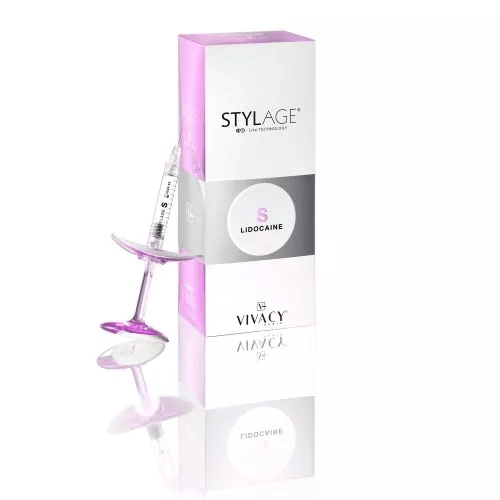


Stylage® S is specifically designed for the natural correction of fine lines and superficial wrinkles.
* The application of the product is reserved exclusively for qualified healthcare professionals.
MEDICAL DEVICE
Launched in the UK around 2011 and produced by the French company Vivacy Laboratories, Stylage® was the first hyaluronic acid dermal filler to contain the local anesthetic lidocaine and an antioxidant in the form of mannitol, all in one product. The presence of mannitol, a “free radical scavenger,” limits the harmful effects of free radicals on the dermis and injectable products, thereby reducing the risk of post-injection inflammation and preventing gel structure degradation.
With its patented IPN-like® (Interpenetrating Network) technology, Vivacy creates products with two structures: monophase structures A and B and IPN-like structures. The two are mechanically independent, making Stylage easy to inject and its higher density of cross-linked nodes makes it durable. The method requires less BDDE, a common compound used to cross-link hyaluronic acid, which the company claims is more efficient, resulting in a safer and longer-lasting product.
The duration of the effects of the Stylage® S treatment is between 9 and 12 months. It is highly individual and depends on many factors such as the patient’s skin type and texture, age, lifestyle, treatment area, and injection technique used by the doctor.
INDICATIONS
Stylage® S is an injection into the superficial and medium dermis
- superficial and medium wrinkles,
- periorbital wrinkles (“crow’s feet”),
- glabellar wrinkles (between the eyebrows),
- fine cheek wrinkles,
- perioral wrinkles (around the mouth),
- oral commissures (marionette lines),
- dark circles (eye hollows) in the tear channel area under the eye,
- rejuvenating the appearance of the hands.
COMPOSITION
Cross-linked IPN-like hyaluronic acid: 16 mg/g
Lidocaine: 0.3%
Mannitol q.s. 1g
pH phosphate buffer: 7.2
PACKAGE
2 pre-filled syringes of 0.8 ml
needles: 2 x 30 G 1/2
CONTRAINDICATIONS
- hypersensitivity to any of the components,
- skin infection near the injection site,
- patients prone to keloid formation,
- women who are pregnant or breastfeeding,
- allergy or anaphylaxis,
- bleeding disorders,
- autoimmune diseases,
- antibiotic therapy.